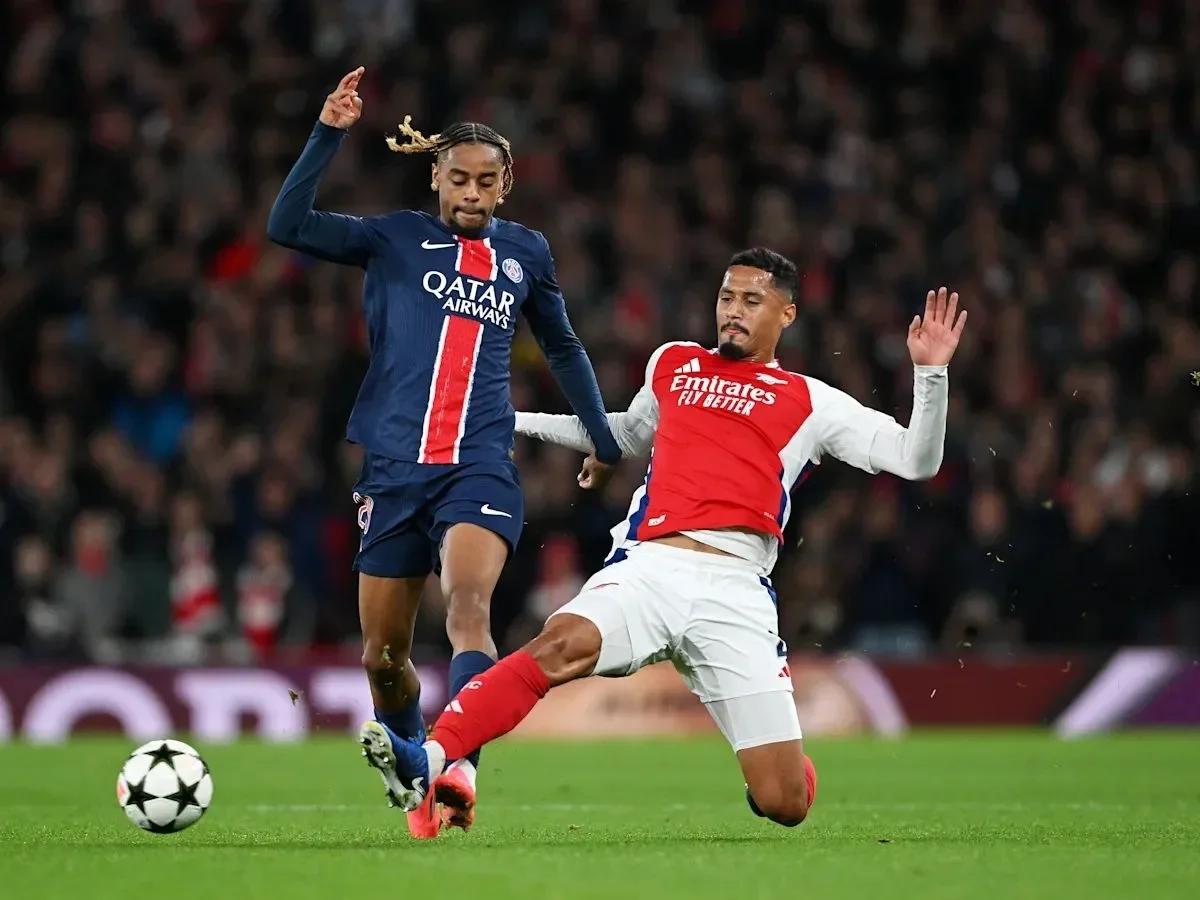
Arsenal vs PSG in the 2026 Champions League final: how they arrive, who could decide it and where to watch it in Barcelona
The 2026 UEFA Champions League final already has the kind of billing that does not need embellishment. Arsenal vs Paris Saint-Germain is not simply a major match. It is the meeting point of two clubs arriving in excellent condition, by different routes, but with the same feeling of having reached a very mature version of themselves. Arsenal arrive with the authority of a side built on order, consistency and patience. PSG arrive with the force of a team that already understands the weight of nights like this and has returned here through talent, speed and an attacking level that is genuinely difficult to match.
That is exactly what makes this final so appealing. It is not only about badges, names or budgets. It is a final between two projects that have evolved, found different solutions to reach the same summit, and now offer a collision with far more depth than the biggest headlines sometimes suggest.
If you are looking for a full, well-written and genuinely useful preview of Arsenal vs PSG, this is it. And if you also want to know where to watch the 2026 Champions League final in Barcelona, the final section gives you the practical part as well.
.jpg)
A final with more weight than usual
UEFA confirms that the final will be played on 30 May 2026 at the Puskás Aréna in Budapest. On the surface, that is simply the scheduling detail that comes with any European final. In reality, it is the starting point for a night that carries much more than that.
For Arsenal, this final means a return to a place the club has been away from for too long. They have not played a Champions League final since 2006, and doing so now, after such a complete season, feels like a final confirmation of the project’s rise. For PSG, the context is different. They arrive as defending champions, with the chance to retain the title and step into that very small group of teams who turn a strong era into a recognisable European legacy.
That is one of the main reasons the match carries so much interest. It is not just a big final because UEFA says so. It is a big final because both clubs arrive with something truly meaningful at stake. Arsenal want to close the season with the most symbolic trophy of all. PSG want to show that what they are building is no longer a brilliant peak, but genuine continuity.
Arsenal arrive as champions and as a fully recognisable team
Arsenal’s present is not explained only by their European run. It is also defined by their domestic season. The Premier League confirmed on 19 May 2026 that Mikel Arteta’s side had become champions of England for the first time in 22 years. That changes the entire emotional reading of their presence in Budapest. Arsenal do not arrive carrying anxiety. They arrive with confidence, with the calm of a team that has already won something major, and with the sense that the work of recent years has finally become concrete.
In Europe, their route has shown a level of solidity very few sides have matched. According to UEFA, Arsenal finished the league phase in first place, with 8 wins from 8 matches, 23 goals scored and only 4 conceded. They then eliminated Leverkusen, Sporting CP and Atlético de Madrid with a blend of control and efficiency that never felt improvised.
It has not been a noisy run, but it has been a convincing one. The club’s stats page on UEFA.com reinforces that picture even further:
- 29 goals in the competition
- 6 goals conceded
- 9 clean sheets
- 86.5% passing accuracy
Those numbers describe Arsenal very well. This is not a side built on empty spectacle. It is built on reliability. It knows how to protect itself, how to accelerate when necessary and, above all, it gives the impression of understanding exactly what kind of match suits it at every stage. In a final, that is usually a huge advantage.
What makes this Arsenal so competitive
The simplest explanation would be that it is a very well-coached team. And it is. But that only gets us part of the way. This Arsenal have gained competitive depth because they have achieved something difficult: being solid without becoming predictable. UEFA speaks of a side that is impenetrable at the back, highly dangerous from set pieces and capable of hurting opponents from multiple parts of the pitch.
You can see that particularly in the way Arsenal spread their threat. They do not live through one star alone or through one attacking pattern repeated endlessly. They can hurt you from a wide cross, a high regain, a long possession sequence or an individual action of quality. That variety is one of the main reasons Arsenal have become much harder to stop.
It also helps that the project’s progression has felt natural. Quarter-finalists, then semi-finalists, and now finalists. There is no sense of accident or miracle here. There is accumulated work, learning and a squad that seems to be arriving at this stage in a very high state of maturity.
.jpg)
The Arsenal players who could define the night
If there is one player who symbolises Arsenal’s attacking danger, it is Bukayo Saka. His official page on UEFA.com lists 3 goals, 2 assists, 35 dribbles and 20 runs into the penalty area. Beyond the numbers, Saka represents Arsenal’s ability to turn a controlled phase into a move that suddenly raises the temperature of the entire match.
Alongside him, Declan Rice brings a highly valuable mix of balance and measured aggression. Saliba, Gabriel and David Raya form the most reliable core of the side. And further forward, the collective attacking development of the group has dramatically reduced dependence on any one individual. UEFA points out that 12 different outfield players have contributed to Arsenal’s goal tally in Europe. That is one of the best pieces of news for Arteta going into the final: his team do not need one single name to be outstanding in order to remain dangerous.
PSG arrive with experience, silverware and intimidating attacking strength
Paris Saint-Germain arrive at the final from a different competitive angle, but one that is just as powerful. The club announced on its official website that it had been crowned Ligue 1 champions for 2025/26, after beating Lens and claiming its 14th league title and fifth in a row. There is another important detail in the same PSG statement: this was their fourth trophy of the season.
That means PSG arrive in Budapest not just with quality, but with the habit of recent success. And that matters. At the end of such a demanding campaign, having already navigated several winning environments leaves a deep mark on collective confidence.
Their European route, moreover, has been more turbulent and more explosive than Arsenal’s. According to UEFA, PSG finished the league phase in 11th place and had to come through an extra round before reaching the main bracket. They got past Monaco, swept aside Chelsea, eliminated Liverpool and survived a fierce tie against Bayern. If Arsenal have arrived through precision, Paris have arrived through impact.
What kind of PSG this final will see
The number that best summarises PSG in this Champions League campaign is almost impossible to ignore: 44 goals. The club’s stats page on UEFA.com and the official UEFA preview both remind us that the team is only one goal away from the all-time single-season record.
But the most interesting point is not only how much they score. It is how they do it. PSG have highly disruptive wide players, full-backs with enormous depth, midfielders capable of organising the game and a collective structure that allows them to accelerate without breaking apart. That combination makes them especially dangerous against sides who concede space, but also against more compact defensive blocks if they can move them around with enough speed and quality.
For that reason, it would be a mistake to oversimplify this Paris side. They are not just a team of flashes. They have more structure, more control and more maturity than they are sometimes given credit for.
The PSG names most likely to decide the final
The spotlight naturally falls on Ousmane Dembélé, and with good reason. His official profile on UEFA.com lists 7 goals and 2 assists in this Champions League campaign. But what makes him truly important is not just the output. It is his ability to break the logic of a move that looked under control.
Alongside him, Khvicha Kvaratskhelia has been one of the most decisive pieces in PSG’s attack. UEFA’s preview credits him with 10 goals and 6 assists, numbers that say a great deal about his influence. Slightly deeper, Vitinha and João Neves are fundamental to giving PSG rhythm without sacrificing balance, while Achraf Hakimi remains one of those wide threats that alters an opponent’s shape through respect alone.
.jpg)
The key factors that could decide Arsenal vs PSG
Reducing this final to “Arsenal’s defence against PSG’s attack” would be too simplistic, even if there is some truth in that line. What makes the match interesting is that it seems to contain several very clear layers.
- The rhythm of the opening quarter-hour. If Arsenal can lower the emotional temperature and pull the game into a more controlled space, they will feel far more comfortable. If PSG turn the opening phase into a looser, more open exchange, they will grow quickly.
- Saka’s flank. Arsenal may find a major route for progression and superiority there.
- Arsenal’s box defending. If Saliba, Gabriel and Raya hold their level, PSG will need a huge amount of precision to turn attacking volume into real damage.
- PSG’s quality in open space. If the match stretches and becomes transitional, Luis Enrique’s side may find exactly the context they want.
- Set pieces. At this level, a corner or wide free-kick can end up carrying more weight than expected.
And, as so often happens, the simplest question is also one of the most important: who scores first. Arsenal are especially difficult to break once protecting a lead. PSG are especially dangerous when they can attack space. That first blow may not decide the final outright, but it could shape its entire development.
Useful facts before kick-off
- Arsenal are one match away from finishing the Champions League unbeaten.
- PSG could become the second club of the Champions League era to retain the trophy successfully.
- Paris have scored 44 goals and are one short of the all-time record for a single edition.
- Arsenal are back in a Champions League final for the first time since 2006.
- The appointed referee is Daniel Siebert, according to UEFA.
.jpg)
Where to watch the 2026 Champions League final in Barcelona
At this point, search intent naturally shifts. Many readers are not only looking for a preview. They are also looking to sort out the plan. That is where searches such as where to watch Arsenal vs PSG in Barcelona, bar for the Champions League final or pub with screens in central Barcelona start to matter.
For that specific need, Temple Bar Ferran and Temple Bar Avinyó make a lot of sense. A final like this does not feel the same everywhere. It asks for screens, atmosphere, well-poured pints and a room full of people who are genuinely invested in the match. Because some games can be watched anywhere, but not every game is truly experienced in the same way.
And this is exactly one of those nights. If you want the final to have the setting it deserves, choosing the right bar becomes part of the match itself.
A final like this deserves the right finish
Arsenal arrive as champions of England, with an excellent European run and a very clear competitive identity. PSG arrive as champions of France, reigning European champions and a side with the attacking level to break almost any script. The final does not need exaggeration. It already has everything required to become a great football night.
The only thing left is deciding how you want to live it.
Looking for where to watch Arsenal vs PSG in Barcelona?
Follow the Champions League final on the screens at Temple Bar Ferran and Temple Bar Avinyó. If you want match-day atmosphere, properly poured pints and a night worthy of the occasion, this is the moment to sort the plan.