
Talking about beers means talking about history, culture, tradition and experience. Beer is not just a social drink: it is one of the oldest fermented products in the world and one of the great protagonists of life in bars, pubs and gatherings for thousands of years.
At Temple Bar, this conversation makes even more sense. An Irish pub is hard to imagine without a strong beer selection, a bar with personality and the kind of knowledge that turns a simple round into a richer experience. That is why this article does more than share curiosities: it explains how beer has evolved, what role Guinness beer plays in that story and why the question how many calories are in a beer remains one of the most searched topics for people who want to enjoy what they drink more consciously.
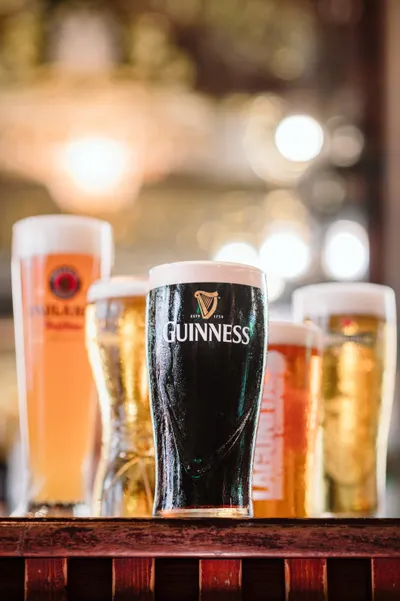
Beer: a drink with thousands of years of history
The history of beer is much older than many people realise. According to Encyclopaedia Britannica, primitive forms of beer already existed before 6000 BCE in regions such as Sumer and Babylonia. There is also evidence of brewing in ancient Egypt, where beer formed part of everyday diet and daily life.
This matters because it shows that beer is not a modern trend or a drink linked only to nightlife. It is a product deeply connected to the development of human societies. For centuries, beers offered a stable and socially important drink in many cultures, and in some historical contexts they also provided a meaningful source of calories.
Britannica also explains that brewing techniques gradually spread into Europe, where beer became part of monastic life, urban commerce and local traditions. During the Middle Ages, monasteries helped preserve and improve the craft of brewing, strengthening a beer culture that still influences Europe today.
Why beer has mattered so much throughout history
Not every drink reaches the cultural and social weight that beer has had. Its significance is not explained by flavour alone, but by a combination of factors that made it central over time.
- Accessibility: for centuries it was more available than other fermented drinks in certain regions.
- Adaptability: it can be brewed with different grains and styles depending on the local culture.
- Social value: it has long been tied to conversation, gathering and community life.
- Innovation: brewing has been one of the most active industries in fermentation, preservation and distribution.
- Identity: countries, regions and brands have built part of their image around specific beer styles.
That helps explain why beer is still not only a beverage, but part of the identity of a place, a pub and a way of gathering. In an Irish pub, that cultural dimension becomes even stronger.
Guinness beer: why it is much more than a famous stout
Guinness beer holds a very specific place in brewing history. It is not just a recognisable brand; it is one of the strongest symbols of Irish pub culture.
According to the official Guinness story, Arthur Guinness signed the famous 9,000-year lease for St. James’s Gate Brewery in Dublin in 1759. That date matters because it marks the beginning of one of the most influential stories in the brewing world.
Guinness beer became a global reference thanks to its sensory profile, visual identity and pouring ritual. In its Draught version, the brand describes a balance of roasted, bitter and sweet notes, with a dark ruby colour and a very distinctive creamy head. That identity means Guinness beer is often seen not just as a drink, but as a recognisable experience strongly tied to Ireland itself.
Guinness has also left a mark through innovation. The brand states that Guinness Draught was first brewed in 1959 to celebrate the 200th anniversary of Arthur Guinness signing the lease. In other words, even within the Guinness story, innovation is part of the brand’s cultural value.
How many calories are in a beer and why it depends on several factors
The question how many calories are in a beer appears more and more often in searches linked to conscious drinking and informed choices. It is a good question, but it needs a nuanced answer: not all beers have the same calorie content.
The number of calories mainly depends on three factors:
- Alcohol content
- Carbohydrate content
- The serving size
The National Institute on Alcohol Abuse and Alcoholism explains that alcohol content varies significantly across beer styles, and this affects the total energy value. In addition, MedlinePlus notes that many people misjudge calories because they do not account for the actual serving size.
So when someone asks how many calories are in a beer, the correct answer is not a single number, but an approximate range based on style, strength and volume.
How many calories are in a Guinness beer
In the case of Guinness, we do have a direct official reference. On the official Guinness Draught page, the brand states that this beer contains 35 kcal per 100 ml and has an alcohol content of 4.2%.
This is useful because it allows a more precise answer to another common search: how many calories are in a beer when the beer is a specific and recognisable stout. It also helps challenge a common assumption: that a dark beer always has far more calories than other styles. Not necessarily. The look of a beer does not always translate into a dramatic difference in calorie content.
In other words, Guinness beer has an intense flavour profile, but that does not automatically make it the most caloric among all beers. As with any beer, what matters is the style, the alcohol content and the volume served.
Beer styles worth knowing
When we talk about beers, people often reduce the category too much. In reality, the beer world is wide and full of important nuances. Knowing the main styles helps people choose better and enjoy the experience more.
- Lager: light, refreshing and widely popular. Often one of the most approachable styles for a broad audience.
- Ale: top-fermented, with more aromatic character and a wide range of profiles.
- Stout: dark, roasted and often linked to coffee or chocolate notes. This is where Guinness belongs.
- IPA: more hops, more bitterness and more aroma. A strong choice for those who want intensity.
- Wheat beer: lighter and more aromatic, with a very different profile from stout or lager.
Britannica explains how the main families of beer developed in different European contexts, with clear distinctions between lager, ale and stout. This matters because not all beers suit the same moment or the same food, and a strong pub offering should reflect that variety.
Beer curiosities that explain its lasting appeal
There are several facts that help explain why beer still holds such a strong place in food and social culture:
- It is one of the oldest drinks in human history.
- Its story is linked to major civilisations such as Sumer, Babylonia and Egypt.
- Monasteries helped refine brewing during the Middle Ages.
- Guinness beer became a global icon while keeping its strong tie to Dublin.
- Colour does not always determine calories, which matters when people ask how many calories are in a beer.
- Service matters: a properly poured beer changes the perception of aroma, foam and texture.
These curiosities are not just talking points. They are part of beer culture, and they help create a richer experience for anyone who walks into a pub looking for more than a cold drink.
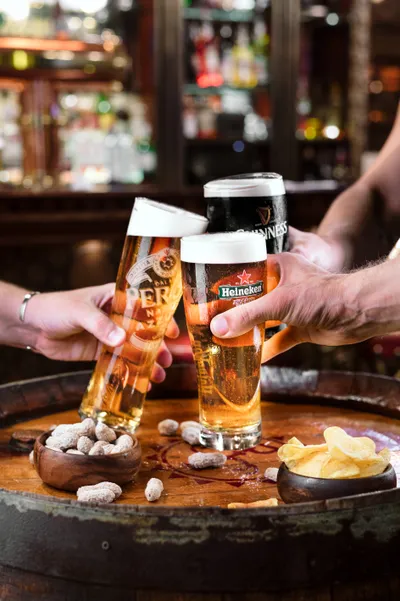
What you can discover at Temple Bar Ferran and Temple Bar Avinyó
All this historical and cultural context becomes more valuable when it connects with a real drinking experience. At Temple Bar, the most practical way to bring this information into the real world is to explore the drinks menus at each venue.
If you want to explore options in central Barcelona, you can check the Temple Bar Ferran drinks menu. If you want to discover the other venue’s selection, you can also browse the Temple Bar Avinyó drinks menu.
Referencing these menus inside the article is not a minor detail. From an SEO and conversion point of view, it is a smart way to connect an informational search such as how many calories are in a beer or Guinness beer with a more commercial intention: what to drink, where to go and what to try at Temple Bar.
How to choose a beer depending on the moment
One of the best ways to enjoy beers is to stop treating them as a single category. The best choice changes depending on the context:
- If you want something classic and recognisable: a properly poured Guinness beer.
- If you want something lighter and more refreshing: a lager may suit better.
- If you want more intensity and bitterness: an IPA brings a stronger aromatic profile.
- If you are sharing food: it helps to think about pairing and dish style.
- If you care about energy value: understanding how many calories are in a beer can help you choose more consciously.
This kind of guidance has genuine value for users and for SEO as well: it answers informational queries while bringing the reader closer to a real purchase decision inside the venue.
Beer still fascinates people because it combines history, flavour and ritual
The reason beer still holds such a strong position is not just the final product. It is everything around it: thousands of years of history, a huge range of styles, pouring rituals, cultural associations and a unique ability to become part of social plans.