
When we think of Ireland, it’s easy to imagine a good pub, a well-served pint, music, conversation, and atmosphere. But Irish culture is also understood through its traditional sports. Among all of them, few have as much history, intensity, and cultural value as hurling.
If you have ever wondered what hurling is, the short answer would be this: it is a traditional Irish sport involving a stick and a ball, fast, technical, and very physical. But to leave it at that would be an understatement. Hurling is not just a sport; it is an important part of Ireland's identity.
What is hurling
Hurling is a team sport originating from Ireland. It is played with a wooden stick called a hurley or camán, and a small ball called a sliotar. The objective is to hit the ball between the posts of the opposing team to score points.
According to the Gaelic Athletic Association, known as GAA, hurling is one of the oldest field games in the world and has been part of Irish tradition for thousands of years.
To understand it simply, we could say that it mixes elements reminiscent of hockey, lacrosse, and Gaelic football, but in reality, hurling has its own identity. Its speed, the use of the hurley, the way the ball is struck, and the rhythm of the game make it a unique sport.
Origins of hurling: a sport with thousands of years of history
The history of hurling is closely linked to ancient tales of Ireland. The GAA points out that there are literary references to the game that date back to the mythical Irish tradition, especially to the cycle of the hero Cú Chulainn, one of the most well-known figures in Irish mythology.
This connection with heroic tales is not coincidental. For centuries, hurling was seen as a practice of strength, skill, bravery, and dexterity. In ancient Ireland, the game was not just entertainment: it also represented a form of physical training and an expression of identity among communities.
The UNESCO recognized hurling as part of the intangible cultural heritage of humanity since 2018. In its official file, it describes hurling and camogie as practices passed down through generations, playing an important role in culture, health, inclusion, and team spirit in Ireland.
How hurling is played
Modern hurling is played on a grass field with two teams. In the adult category, each team usually has 15 players. Each player uses a hurley to control, strike, or carry the sliotar.
The scoring system is one of the most interesting parts of the game:
- 1 point: when the sliotar passes over the crossbar and between the posts.
- 3 points: when the ball enters the goal under the crossbar.
The Encyclopaedia Britannica explains that hurling is played with a leather ball and a wooden hurley, and that the game has long been recognized as one of Ireland's national pastimes.
The hurley and the sliotar: the two essential elements
A hurling match cannot be understood without its two main elements: the hurley and the sliotar.
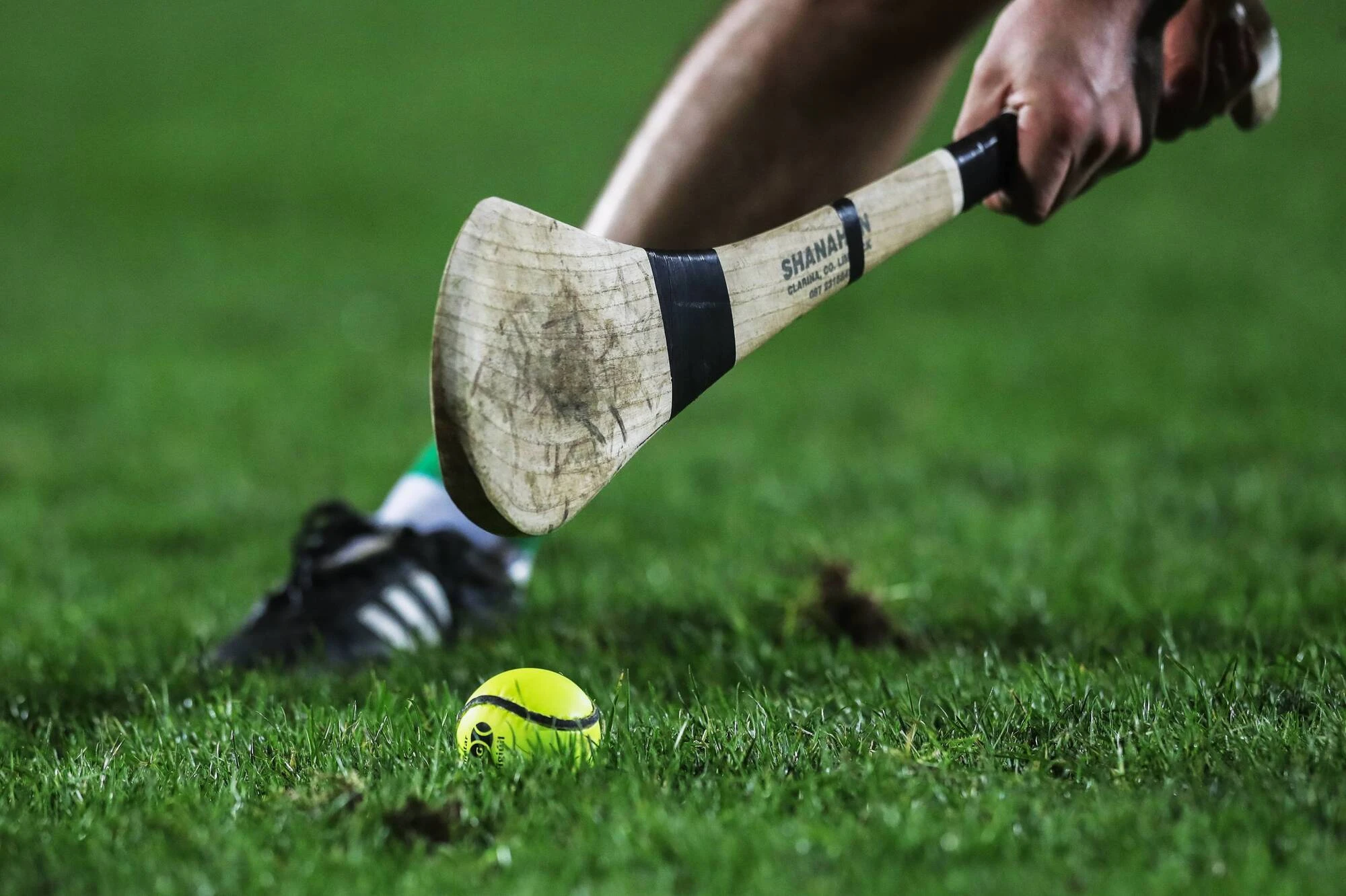
The hurley is the wooden stick used to strike the ball. Traditionally, it is made from ash wood, although modern variants exist today. Its shape is different from that of a hockey stick: it has a wider blade at the bottom, designed to control and strike the sliotar with precision.
The sliotar is the ball of the game. It is small, hard, and fast. In the hands of skilled players, it can travel at high speeds, which explains why hurling is perceived as such an intense and spectacular sport.
To better understand the speed and technique of the game, you can watch the official UNESCO video on hurling, produced by GAALearning.
Why hurling is so important in Ireland
Hurling is important not only for its antiquity. Its cultural strength lies in the way it is lived. In Ireland, Gaelic sports are deeply tied to the local club, the county, the family, and the community.
The GAA, founded in 1884, played a key role in the organization and preservation of modern hurling. Its creation helped standardize rules, protect traditional Irish sports, and reinforce the role of sport as part of national identity.
That’s why talking about hurling is also talking about local pride. Teams represent counties, towns, and communities. For many fans, following hurling is not just watching a match: it is supporting a story, colors, and a shared tradition.
Hurling and camogie: male and female tradition
When talking about hurling, it is also worth mentioning camogie, the female version of the sport. UNESCO includes hurling and camogie within the same cultural recognition, highlighting that both are part of this living tradition passed down through clubs, schools, and communities.
This is important because it shows that the value of hurling is not only in the male sports spectacle but in a broader cultural practice shared by men, women, children, clubs, and families.
The excitement of a hurling match
Those who watch hurling for the first time are often surprised by the speed. The ball can move through the air, bounce on the field, be struck from long distances, or be controlled on the hurley while the player runs.
The game demands coordination, strength, vision, reflexes, and bravery. There is physical contact, rapid changes of possession, and an intensity that keeps the audience engaged. This mix of technique and energy explains why hurling is so fascinating even for those who don’t know the rules at first.
What hurling has to do with an Irish pub
An authentic Irish pub is not understood solely by the beer or the decor. It is also understood by the culture it represents. And hurling is one of those references that help explain what Ireland really means beyond clichés.
In an Irish pub, sport, conversation, and community often play a central role. Just as with football, rugby, or major sporting events, hurling connects people around a shared tradition.
For a local place like Temple Bar in Barcelona, talking about hurling makes sense because it reinforces a clear idea: an authentic Irish pub not only serves pints. It also brings its customers closer to Irish culture, its stories, its sports, and that very social way of enjoying leisure.
Hurling: more than a sport, Irish cultural heritage
The recognition from UNESCO in 2018 confirms something that Ireland has known for centuries: hurling is much more than a game. It is a living tradition, passed down through generations, with a strong cultural, social, and community value.
That is precisely why it remains relevant today. It is not a relic of the past. It is a contemporary, competitive, exciting sport deeply connected to Irish identity.
Discover Irish culture at Temple Bar
Getting to know hurling is a different way to approach Ireland. It is understanding that behind every pint, every pub, and every conversation, there is a rich, ancient, and very vibrant culture.
If you are looking for an Irish pub in Barcelona where you can experience an atmosphere with sports, food, pints, and real references to Irish culture, Temple Bar is a good stop to start.
Do you want to discover more about Irish culture in Barcelona?
Come to Temple Bar and enjoy an Irish pub atmosphere with pints, food, live sports, and an energy meant to be shared.