The Rural Origin: The Energy for a Day in the Field
To trace the origins of the Irish breakfast, one must travel to rural Ireland during the Middle Ages and the early modern period. Traditionally, Irish peasant cuisine revolved around subsistence farming and local crops.
The Caloric Need of Agricultural Society
In a predominantly rural economy, the first meal of the day had to provide the caloric density necessary to withstand long hours of intense physical work outdoors, under low temperatures and constant humidity.
-
Protein and Lipid Density: The use of salted pork (pork belly and back bacon), along with animal fats (lard or dripping) for cooking, provided a reserve of slow-releasing energy.
-
The Rise of Black and White Pudding: Blood pudding (black pudding) and white pudding (white pudding) emerged as a total utilization solution after the pig slaughter. The mixture of animal blood, pork fat, spices, and native grains (like ground oats) allowed for the preservation of vital nutrients for weeks.
Real historical fact: The inclusion of oats (oats) in Irish puddings was not accidental. While in Great Britain wheat became the predominant cereal, Ireland's humid climate historically favored the cultivation of oats (Avena sativa), making it the essential binder of traditional Gaelic charcuterie.
From Farms to Victorian Mansions
During the 19th century, the structure of the Irish breakfast underwent a qualitative leap. With the Industrial Revolution and the consolidation of the Victorian era, affluent families and the bourgeoisie adopted breakfast as a social ritual and a display of wealth.
The Standardization of the Ritual
It was at this stage that the dish added the accompaniments we now consider essential:
-
Soda Bread: Introduced in the mid-19th century after the arrival of baking soda (baking soda) in Ireland. Not requiring fresh yeast or long fermentation times, the combination of flour, baking soda, salt, and buttermilk (buttermilk) allowed families to make soft bread daily in iron pots (bastible) over peat fires.
-
Black Tea with Milk: The mass importation of tea through the trade routes of the British Empire made concentrated black tea (like Irish Breakfast Tea) replace light beer or sour milk as the quintessential hot beverage accompaniment.
The Science of a Hypercaloric and Comforting Dish
Beyond tradition, there is a neurobiological and chemical reason why the Full Irish Breakfast is so comforting:
-
The Maillard Reaction on the Grill: When browning pork sausages, bacon, and mushrooms at high temperatures, proteins and sugars transform, generating aromatic compounds (pyrazines) that stimulate appetite.
-
Dopaminergic Response: The combination of quality fats, complex carbohydrates (from oats and soda bread), and sodium triggers the release of dopamine in the brain, generating an immediate sensation of satiety and thermal comfort.
-
Lipid Balance: The natural acidity of roasted tomato and the touch of pepper or mustard sauce cut through the dish's fat density, cleansing the palate with each bite.
Temple Bar Barcelona: The Pub Culture and Tradition in the Gothic Mansion
Understanding Irish gastronomy is understanding the culture of its meeting spaces. Traditional drinks in Ireland have never been an individual or rushed act; they are part of community life and the spirit of hospitality that defines traditional pubs.
In the heart of historic Barcelona, Temple Bar connects with this philosophy of comfort, good product, and welcoming atmosphere.
-
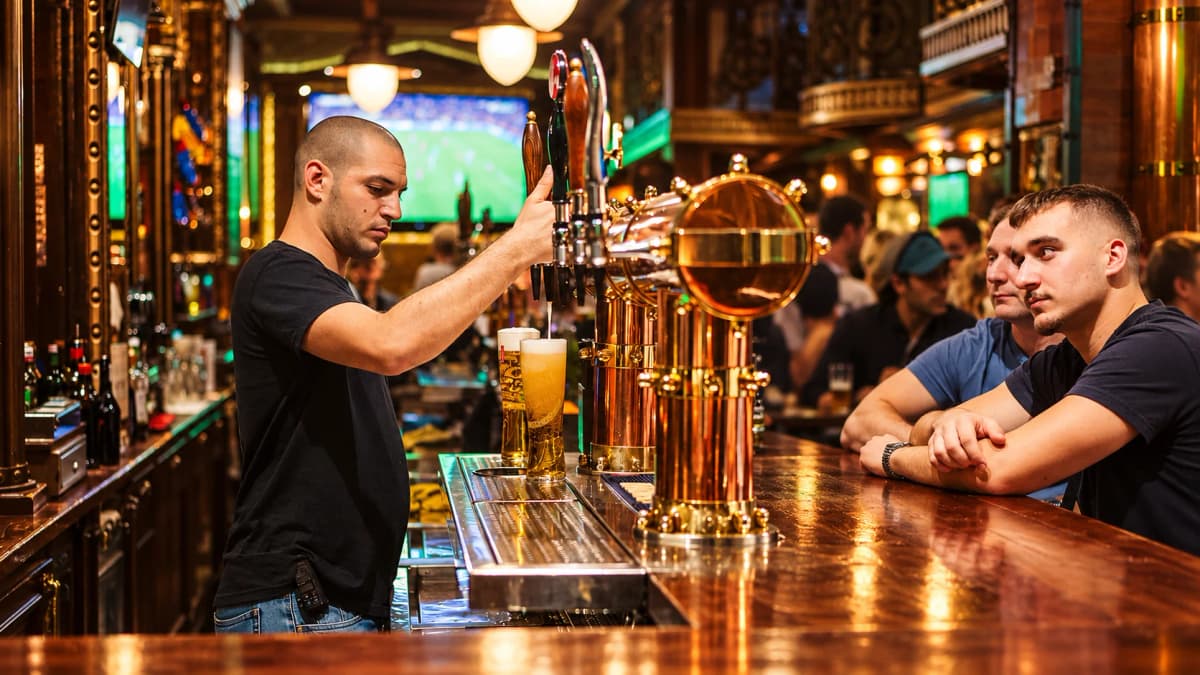
Authentic Atmosphere: Surrounded by solid wood, warm lights, and elements brought from Gaelic tradition, the space offers a refuge from the urban hustle of Plaza Real.
-
The Value of After-Meal Conversation and Gathering: Just like in the mythical taverns of Dublin or Cork, at Temple Bar, food is the perfect excuse to enjoy a live sports event, share a well-poured pint, and extend the conversation among friends.
Summary of Historical Keys
-
Functional Origin: It was born as the main meal for Irish farmers to endure physical work under the North Atlantic climate.
-
Ancestral Sustainability: The black and white pudding are centuries-old examples of waste-utilization cooking based on oats and spices.
-
Cultural Evolution: It transitioned from being a peasant sustenance to a refined dish during the Victorian era of the 19th century.
-
The Secret of the Bread: The soda bread revolutionized the Irish table thanks to the use of buttermilk and baking soda.
Experience the Authentic Irish Spirit in Barcelona
Behind every traditional recipe lies centuries of history, climate, geography, and human relationships. Discovering Irish culture does not require taking a plane; just cross the door of a tavern designed to make you feel at home.
If you are looking for a place with personality, live sports, and the best atmosphere in the center of Barcelona, Temple Bar is waiting for you.